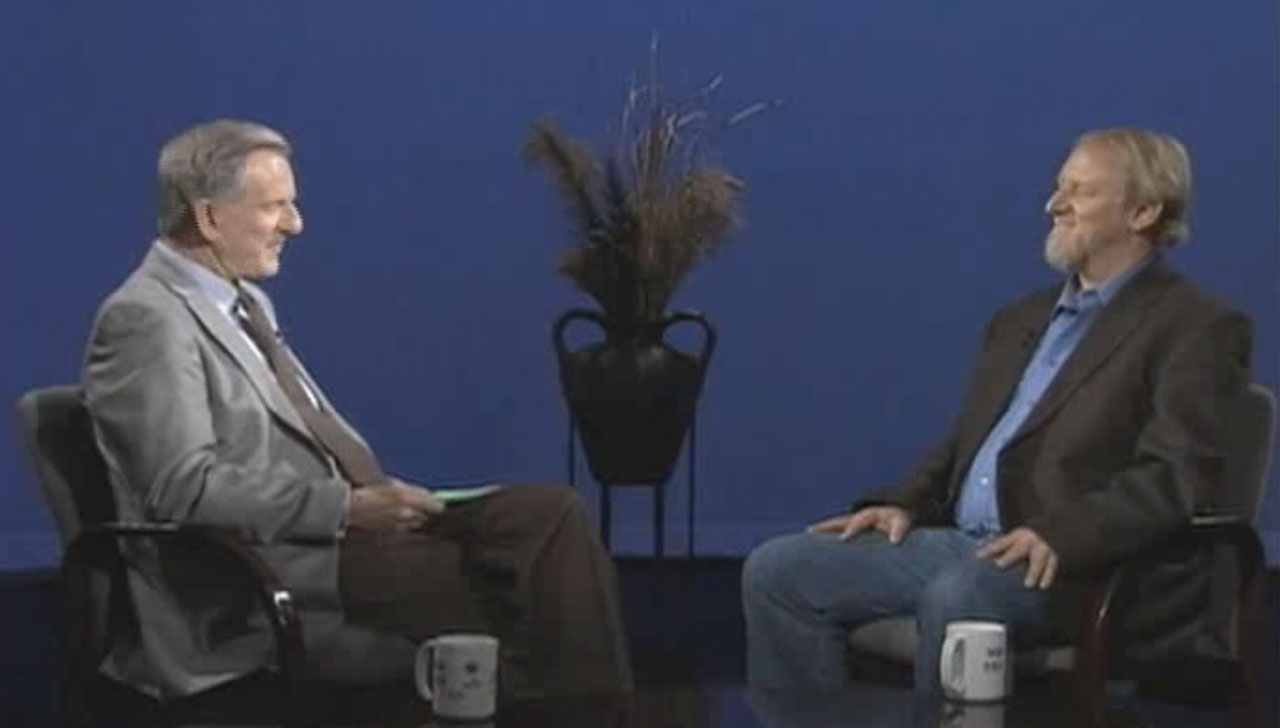
Corporate Responsibility | CATOCorporate Responsibility goes by many terms: Corporate social responsibility, corporate citizenship, responsible business, corporate social performance, etc. In their eagerness to be better corporate citizens and get and keep customers, corporate responsibility is a trend that many companies are taking more seriously.  It is basically what a company will do beyond what they must do to satisfy a customer.

And it is looking at more than maximizing shareholder value and leveraging the maximum ‘good” to sustain the company for a future generation of shareholders.

Joining us are Guests:

Ed Ahnert comments: “You won’t find many maximizing shareholder value or making a lot of money on many corporate mission statements. Corporate responsibility is about creating value for all the stakeholders; from employees to the community it impacts.”

The model Paul Pederson shares outlines the various facets of what Corporate Responsibility involves. It includes, yet is not limited to:

  • Corporate Sustainability
  • Sustainable Development
  • Transparency
  • Triple Bottom Line
  • Corporate Social Responsibility
  • Business Ethics
  • Corporate Governance
  • Corporate Citizenship
  • Corporate Responsibility

[flashvideo file=wp-content/uploads/1500/CorporateResponsibility1508.flv /]

He comments: “Corporate Responsibility is an expansion for not just their own- the company’s activities- but the people they buy products from. They want to make sure their own vendors are not violating the law or hurting the reputation of the company. Corporations are more concerned and involved.”

A dissenting voice is heard from Fred Smith, who believes we need to be aware of price and the quality of what our vendors deliver and that they are not operating illegally, but that we cannot and should not “impose our standards and crippling regulations on other countries we trade with. We have no legal responsibility to do so.”

The lively debate continues with viewpoints on many sides of the equation. The outcome: Corporate social responsibility is fast becoming a fact of the American way of doing business.

As always, thank you for joining us, as we talk about things that matter with people who care…

Niki Nicastro McCuistion
Executive producer/ producer

***

1508

Play

Michael Strong, Chief Visionary Officer of Flow, joins Dennis McCuistion, host of the McCuistion Program, from Las Vegas, PBS Channel 10, during the Freedom Fest conference held there each summer. Flow is a non-profit organization started 5 years ago with John Mackey, CEO of Whole Foods. Flow focuses on liberating the entrepreneurial spirit for good and believes entrepreneurship and business can solve global problems. Mr. Strong cites companies from Whole Foods to Southwest Airlines that have a mission of doing good and tells us that there is a market driven demand for companies to incorporate social responsibility in their corporate mission.

Mr. Strong advises that non-profits be more entrepreneurial and tells us the strict charity model is now becoming more entrepreneurial in its focus as charities realize that the  old way of ” begging,” is no longer a  productive model  for  accomplishing  the organization’s mission.

Adapting external social responsibility agendas seldom work. Missions that comes from within and that are congruent with the organization’s values offer  more efficacy.  Missions that coincide with the organization’s  are naturally  more effective. In addition, “do-gooder” missions often positively affect the bottom line.

Michael Strong began his entrepreneurial career as an anti-capitalist. While at  the University of Chicago, he became increasingly convinced that the best way to make a positive impact in society was through business. He believes  that the market can in fact  create prosperity and peace.

Strong furthers the discussion on social responsibility in business by addressing the value of property rights in relation to poverty alleviation.  Also included in this segment are Strong’s views on environmentalism, political allegiance, regulatory agencies and the effect of unemployment rates of young men on peace.

If you’d like to learn more of Michael Strong’s thoughts and view points regarding social responsibility in business, peace and prosperity, you can visit his blog. If you’d like to become more involved with what Flow is doing, please visit the website to learn more.

***

11.09.08 – 1720