This entry is part 3 of 3 in the series corporate governance.  

Corporate Governance - ChinaDuring McCuistion TV’s episode on Corporate Governance and its impact on China and the world, they address three questions related to the credit crisis and corporate governance:

- How do the Chinese see our economic situation?
- How has trade impacted what multinationals do?
- How has American economic and foreign policy impacted the rest of the world?

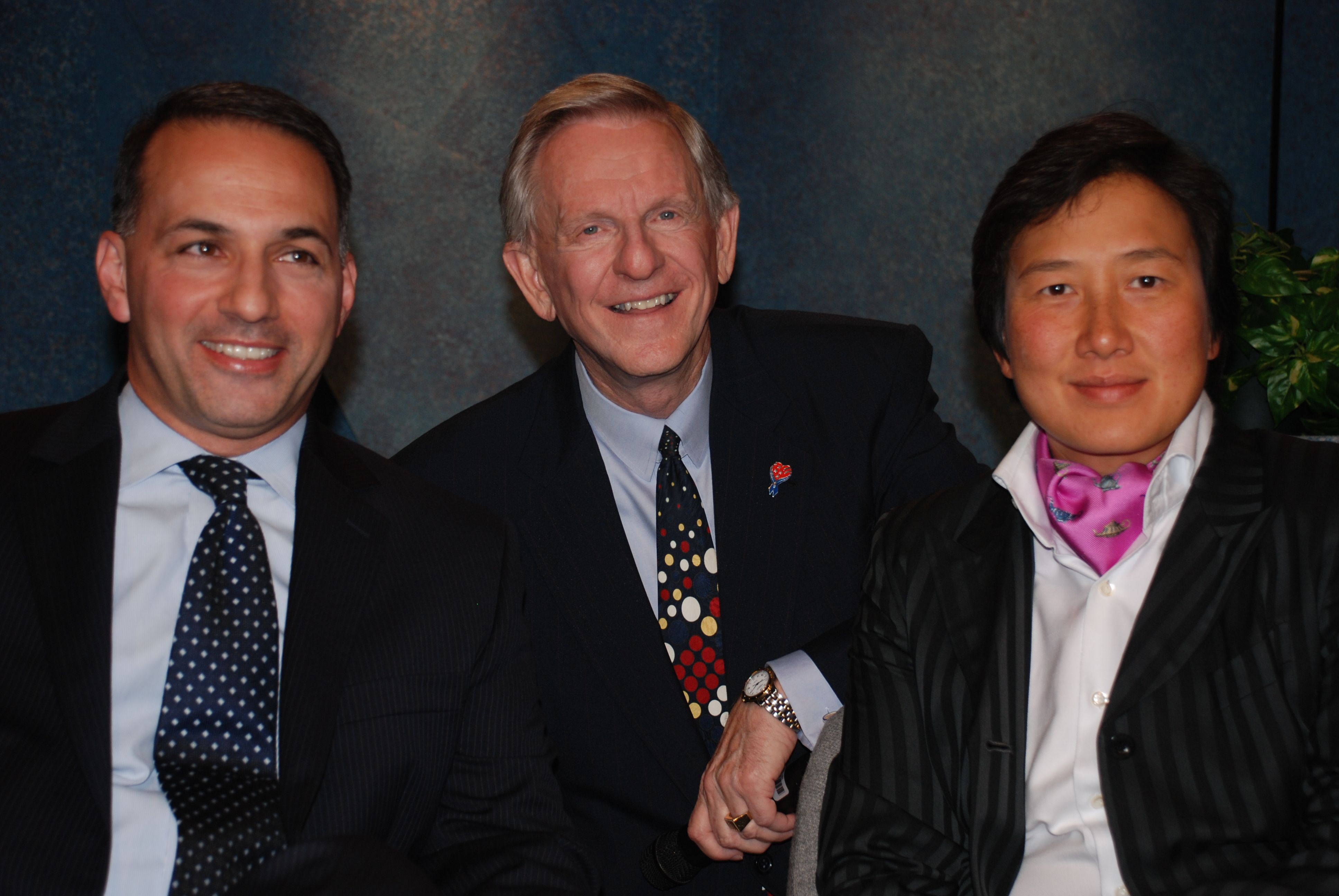
Guests include:

Angelina Kwan: Managing Director and COO, Asia Pacific, Cantor-Fitzgerald
The Hon. Mario Mancuso: Partner, Akin Gump Strauss Hauer & Feld, LLP, Former Under Secretary of Commerce

One of the points that host, Dennis McCuistion, addressed was that by-and-large we as a society do not often talk about China when discussing the American credit crisis and corporate governance, although it does impact them. He asked Angelina Kwan for her perspective.

Ms. Kwan believes that,

“The US is China’s best past and present trading partner. China wants a strong dollar. China really thinks that America has a great entrepreneurial spirit and it will get out of the current trade deficit.”

Ms. Kwan states that China will continue to work with the US and not in an adversarial role, but first and foremost as trading partners.

Dennis agrees, “We, the US and China, need each other. China is the largest creditor of the United States. We need to both figure out how they [China] will get paid.”  Angelina Kwan tells us that the US needs to look at how it’s dealing with their dollars and its fiscal policy. China and the US are having serious discussions about China exporting less and the US having less dependency on exports and not relying so heavily on Asia and China.

The guests agree that trade is good for both partners. Mario Mancuso adds,

“A prosperous China is in the best interests of the United Sates and vice versa. Both being prosperous is in the global interest. These are the two largest economies in the world, and we agree on our ultimate objectives. We just can’t figure out how to implement those objectives- that’s the irony.”

He tells us, 95% of our customers are outside the US and if we build a wall, we close competitors out.

“A rules-based trading system is advantageous to competitive parties and the US is the most competitive in the world.”

US consumers benefit with better products at cheaper prices…

“An additional point, I take a backseat to no-one in terms of levying criticism, at the same time I don’t think the final chapter has been written on US economic leadership.”

UTDAnd a special thank you to the Institute for Excellence in Corporate Governance,University of Texas at Dallas, School of Management, (http://som.utdallas.edu/iecg/) for providing the guests for this 4 part series on Corporate Governance.


Tune in for the rest of the story as continue to talk about things that matter with people who care…

Niki Nicastro McCuistion
Executive Producer/Producer

***

1809 – 11.22.09

This entry is part 2 of 2 in the series Fawaz Gerges on the Muslim World.  

Dennis McCuistion is joined once again by Fawaz Gerges, Ph.D. to talk about the situation in the Middle East and the past and future of Jihadists. Fawaz Gerges is the author of Journey of the Jihadist: Inside Muslim Militancy and the Christian A. Johnson Chairholder in International Affairs and Middle East Studies at Sarah Lawrence College.
Dr. Gerges joins us once again to discuss the impact of Jihadists. He states, “A Jihadist is an Islamic activist who wants to replace the secular state with Islamic Sharia Law with all means at their disposal including violence and terrorism to bring about their Utopia.”  But he says, “we’re talking about a tiny group, thousands, not millions.”

[flashvideo file=wp-content/uploads/1600/1603_jihadists-Jihadists-1603.flv /]

Dr. Gerges  goes on to talk about the limited group of extremists such as Al Qaeda,“who manipulate and distort Islam in order to garner political support at home.” He acquaints viewers further with why he conducted his studies, spending over 16 months in the Middle East region, interviewing Jihadists as well as mainstream Muslims. Dr. Gerges helps us to better understand what caused this problem.

Join us to get a clearer perspective on how the Jihadist movement has changed since its inception in the 1970’s beginning in Egyptian Universities as a socialist movement.  Through this episode you’ll also gain a more thorough understanding of how we got to 9/11 and where the dangers still remain.

Niki Nicastro McCuistion
Executive Producer/Producer

***

1603

This entry is part 1 of 2 in the series Fawaz Gerges on the Muslim World.  

During this episode of McCuistion Television’s, “How America Is Seen in the Arab and Muslim World,” Dennis McCuistion is joined by Fawaz Gerges, Ph.D. Fawaz Gerges is the author of Journey of the Jihadist: Inside Muslim Militancy and the Christian A. Johnson Chairholder in International Affairs and Middle East Studies at Sarah Lawrence College.

In the wake of 9/11, Americans were seen favorably by most people in the Middle East. Dr. Gerges, a Middle East scholar, who spends time researching how America is viewed in the Arab and Muslim world has traveled from Lebanon, to Yemen, Syria to Jordan and Algeria. He believes that today the feeling against America has both consolidated and hardened. According to Dr. Gerges,

“There is a deep anger and rage, some of which has come about as  a result of the Iraq war… There is a problem. We are losing the average Muslim, the floating middle ground, and this is a red flag.”

[flashvideo file=wp-content/uploads/1600/1602AmericaIslam%20.flv /]

Dr. Gerges, who spent over 16 months in the region, interviewed hundreds of policy makers, opinion makers and Jihadists. He talks about his work as, “a book of voices. I let militants and Jihadists tell their own stories.”

Join us and Dr. Gerges as he shares his ideas as to why America was attacked on 9/11 and illuminates the differences between Jihadists and Islamists. He talks about why we should care about not alienating Muslim public opinion and why we are seen as a colonial power.

***

1602