This entry is part 1 of 2 in the series addiction 

Addiction is the country’s #1 health problem. It affects business and disrupts personal lives. It costs businesses and individuals.  Joining Dennis McCuistion in this two part series are professionals  who proactively work to educate the public on addiction causes, the costs and the solutions to addiction.

  • Christopher Kennedy Lawford – Actor, Author and  Public Advocacy Consultant for Caron Treatment Centers; New York Times bestselling author of Symptoms of Withdrawal: A Memoir of Snapshots and Redemption and Moments of Clarity: Voices from the Front Lines of Addiction and Recovery
  • Kevin Gilliland, Psy.D- Clinical Psychologist and CEO of Innovation 360
  • Bill Teuteburg – Interventionist associated with The Caron Foundation and a longer term residential program known as Renaissance.

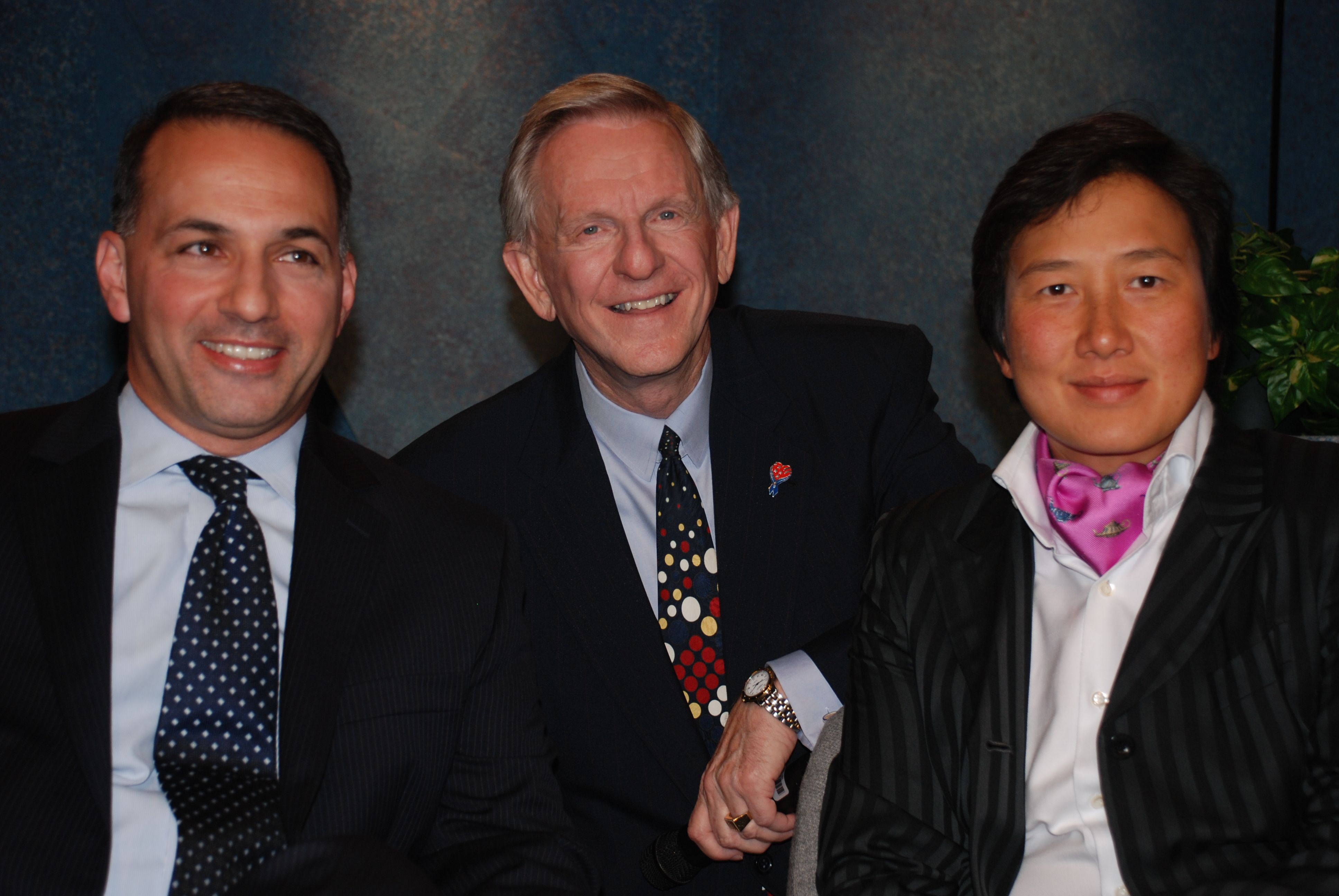
Christopher Lawford Kennedy begins the discussion on addiction causes by touching on his own experience with addiction, mentioning that he was a highly functional addict and how that played out in his life. He touches on how addiction is psychological, sociological and Dennis McCuistion, Niki McCuistion, Christopher Lawford Kennedy, Kevin Gilliland and Bill Teuteburg - Addiction Causesenvironmental. He likens his experience to the result of a “perfect storm” of events. He touches on his traumatic childhood, from the divorce of his parents to the brutal assassination of two of his uncles. He mentions that at the beginning his addiction saved his life, “they (drugs) stopped working,” he says, “but they saved my life in the beginning.” Eventually, he says,  the addiction takes over and you’re dancing with an 800 pound gorilla.

Dennis McCuistion and Christopher Lawford Kennedy at Addiction Causes TapingBill Teuteburg discusses the disease and how it  is even more  lethal than many  realize. “It’s not very often that you see alcoholism on a death certificate.  But you will see heart attack, falling off a ladder…” and the actual cause is an addiction.  Bill, now  an activist,  discusses  his personal experience. He has been in recovery from a heroin addiction for 24 years.

Kevin Gilliland touches on addiction as a  a chronic brain disease  and not solely  a moral  or responsibility issue. He discusses the  Bill Teuteburg - Addiction Causes Tapingmixture of genes and environment and that individuals may have different reactions to drugs or alcohol, even in the same family.  “You just don’t know if you are the one that will have one sip and then your brain will be hijacked.” Like Christopher, he emphasizes that addictions may seem to “work”   but then they become a runaway freight train.

The panelists discuss our drinking age,  and if it should be lowered or not. This episode on addiction causes is truly an eye-opening episode that will leave you waiting for Part Two, where each of the panelists discuss what to do about addiction, how to get treatment  and the hope for resolving the problem.

***

1805 – 10.25.09

Limited GovernmentIn McCuistion TV’s discussion on Limited Government, the panelists focus their discussion on the credit crisis, free markets and limited government.

Joining Host Dennis McCuistion are:

Doug Casey is not a fan of government as it is as he believes it coerces opinions. He feels entrepreneurs would be the better solution to many issues.

Dennis asks: Isn’t this anarchy?

In response, we find that Doug Casey believes that government’s role in a civil society is to protect us from force, inside and outside the bailiwick… and to adjudicate in a fair court system. He asserts that Government is a busy body and power monger and it does not serve a useful purpose

Thomas Woods believes that we need to return to the foundation of the US Constitution and 10th amendment. He believes that too many Think Tanks are chasing a unicorn with their asking for funding to curb spending, etc. and nothing happens. He says of Government that it has a monopoly to tax and that moral principles are abandoned when it comes to government. Government fails on absolute standards of society.

***

1804 – 10.18.09

LibertarianismIn a conversation about the politics of freedom David Boaz and Dennis McCuistion answer the question: “What is a libertarian?” as well as discussing the societal fight over power and freedom since time immemorial.

Joining Dennis McCuistion is David Boaz. David Boaz is the Executive Vice President of the Cato Institute and author of Libertarianism: A Primer.

Dennis and David talk about the principles of libertarianism that are in the Declaration of Independence and the Constitution. They discuss absolute free trade and the conflict between big government, the Federal Reserve and free markets.

As they continue to discuss all that surrounds the question, “What is a libertarian,” they address the query of individuals having the right and responsibility to make decisions over their own lives, yet today government makes many of these decisions. The classical liberal position of the 18th century is discussed and how parties function today.

They continue to discuss libertarianism by discussing Think Tanks and the differences between them.  The Cato Institute, for instance, is fiscally conservative but socially liberal. David Boaz addresses the ‘polling’ Cato has done regarding how people view politics and parties. He states that many poll libertarian on the fiscally conservative, socially liberal side, with less government interference.

As a Think Tank, Cato is skeptical of government interference in your personal life, from what Americans read to whom Americans marry.  They believe that the government has no right to dictate values. Cato is different from the Heritage Think Tank, which is more conservative. Brookings, for instance, is more sympathetic to government and is further to the left on economic policies.

Dennis and David both agree that ideas are important and many voters don’t seem to care and certainly government does not. Policies are made by special interest groups promoting their own agendas. Yet independence is bred into the bones of the United States. It is what makes us a great country and freer than others. We have free enterprise, private property, religious freedom, and separation of Church and State.

Join us as we answer the question, “What is a libertarian?” and discuss issues surrounding libertarianism and the politics of freedom.


1803 – 10.11.09

Wellness means making life choices in your diet, exercise and how you care for yourself. Applying general wellness solutions can prevent diseases and slow down the signs of aging.

During this episode of McCuistion Television, Dennis McCuistion discusses the benefits of wellness with his panel of experts.

There is a decline in people participating in preventative healthcare services. Historically, 15-20% of the population pays attention to wellness; however, 80% of the population takes up the healthcare costs.  The panelists share a common passion for the importance of corporate wellness programs and for preventative methods being more of a focus than traditional healthcare budgets.

Witthorne works with Cooper Concepts, Inc.  The founder, Dr. Ken Cooper, is the Father of Aerobics and he and his staff have been in the business of wellness for years.  The Cooper Center has concluded that for a person to have overall general wellness, they must first change their habits. Witthorne discusses in more detail how the Cooper Center goes about promoting general wellness for their clients.

Panelists agree that if staff wellness programs were implemented, the risk of losing staff hours based on illness and paying deductibles on preventable illnesses would decrease. Companies simply cannot continue to give out double digits in healthcare when general wellness solutions can prevent many illnesses.

***

04.26.09 – 1715

This entry is part 3 of 3 in the series Nutrition 

Nutrition-VegetablesDuring an interview and follow-up Q & A with T. Colin Campbell, PhD., author of The China Study, Campbell discusses what we should eat, shouldn’t eat and how to eat right in a fast food nation. Campbell, a strong proponent of vegan benefits for health, disease prevention, and longevity of life goes on to further explain details of his research and findings during his China Health Study.

Campbell’s initial research consisted of in-depth lab research focusing on the consumption of animal based foods versus plant based foods and its effect on the rate of disease. In his research, conducted in China, he and his team surveyed 130 villages (6,500 families) taking necessary samples, such as blood and urine, and sited nutrient levels and elements of that nature. They then compared information on their blood health with the rates of disease for 400+ kinds of diseases.

Their findings clearly indicated that to have optimized health, animal products should be eliminated and a strict vegan diet is the healthiest way to prevent disease.

Throughout the course of the interview and Q & A, he continues to compare the China study’s diet with the Mediterranean diet, the myth of animal calcium intake, the role of fat in relation to disease and more.

Following the original airing of this episode, host, Dennis McCuistion tried out the diet to see if it was everything it claimed.  Click here to see his findings on Vegan Benefits to Health.

***

04.19.09 – 1714

This entry is part 1 of 3 in the series Nutrition 

In Part One of the two-part series on science and health with T. Colin Campbell, PhD., Campbell discusses his findings on what science is actually saying about health and nutrition and the vegan benefits to health.  Dr. Campell is the author of The China Study, a Professor Emeritus of Nutritional Biochemistry at Cornell University and the Project Director of the China-Oxford-Cornell Diet and Health Project.

Click here to read how Dennis McCuistion applied the principles of this episode in his vegetarian diet experiment.

There is an obvious health problem in the United States.  While, American citizens spend more on health care than any other country, two-thirds of the country is overweight. Greater than 15 million Americans have diabetes, more than 1 million have high cholesterol and half of all Americans have a health problem that requires them to use a prescription drug.  Dr. Campbell sought to discover what, if any, are the changes that could be made to the American diet to better prevent disease. Partnering with Cornell, Oxford and the Chinese Academy of Preventive Medicine, Dr. Campbell conducted his study.

The American diet consists of high quantities of protein. However, the findings of The China Study suggest that there are significant vegan benefits to health.  Disease increases when a person consumes more than 10% protein in comparison to his or her daily caloric intake. The average American has a protein consumption of 17-18%  and 70-75% of that is from animal foods. Through Campbell’s research, it became very clear that there is a direct relationship between animal protein intake and disease increase. The findings showed that as soon as animal protein started to show up in the diet, there was an increase in cholesterol, cancer and heart disease.

Dr. Campbell, closes his conversation noting that his intention in his message is not to push an opinion on listeners, but rather to provide information to the public that unfortunately has not been taught. His concern is that the information the public tends to receive is incorrect, therefore consumers cannot make educated choices on healthy diets.  The facts from his study clearly point toward strong vegan benefits to healthy living.

***

04.12.09 – 1713

This entry is part 1 of 2 in the series Western Culture 

Herb Meyer, author of The War Against Progress and former Vice Chairman of the CIA’s National Intelligence Council during the Reagan Administration, joins Dennis McCuistion for this installment of FRTV. With the quickly changing world we find ourselves in today, Meyer addresses the biggest cultural challenges facing America and Western civilization during Part One of a two-part series.

According to Meyer, radical Islam, the demographic downturn worldwide, and the current cultural war are threatening the survival of Western Civilization and traditional culture in America.

Radical Islam - Radical Muslims do not accurately represent Islam as a whole. However, Meyer explains that most Germans were not Nazis, yet when the Nazis were in power, it led to World War II.  History is the story of competing operating systems.  The Middle East operates off of an old operating system and those that operate out of the Western system have drastically different world views.  He elaborates on the exact differences between the two world views and explains why this is a very serious challenge to western civilization.

Demographics - The birth rate is dropping at a greater rate than at any other time in history.  In order to keep the population at the same level, there must be 2.1 births per person in real numbers.  However, across the western world the birth rates are well below  2.1.  The economic implications are staggering.  However, in the non-Westernized Muslim world, there is a 2.1-6.8 replacement rate.  He spends time explaining the specific differences country to country and the various implications to Western civilization if something does not change.

Cultural War – Culture in America is also at risk. Some are calling the current cultural war in America the “second Civil War.”  The war is essentially summarized as Church vs. State or Religious Right vs. Secular Left. The crux of the fight centers around whether or not the family or the government will be the center of American life. Does the American culture desire a big government or a small government?

In part two of this series, Meyers talks about how we should face these challenges.

***

04.04.09 -1710

This entry is part 2 of 2 in the series Prescription Drugs 

This is part two of a two part series on pharmaceutical companies and their relationships with the Food and Drug Administration (FDA). Our focus is on the efficacy of prescription drugs as well as the cost for the consumer.

Jonathan Emord, attorney & author of The Rise of Tyranny and Dr. Charles B. Simone speak on the truth about the FDA.  An enormous amount of marketing dollars are spent by pharmaceutical companies to market their drugs. Thus,  patients learn to demand certain drugs from their doctors.  The problem with this is that often times over-the-counter drugs (i.e. Aspirin) or nutrients (i.e. fish oil) will have the same effect on one’s lifespan as a prescription drug.

Jonathan Emord has defeated the FDA six times and is well-versed in the issues surrounding the corruption of the United States health care system. At the center of the FDA issue is that of accountability. The checks and balances that are in place for government are non-existent for the FDA.  The FDA Commissioner has the authority to create law (regulations), enforce violations, and judge the violation.  The Commissioner of any independent regulatory committee is virtually all-powerful. This means that 3/4 of the laws that are made are not made by representatives in Congress, but they are in fact made by unelected officials.  And because of the controversial nature of the committee issues and the fragile nature of congressional elections, congressmen will avoid making the tough decisions and instead diplomatically mail a letter to the regulatory committee.

Another key component to concerns about the FDA is the way that economics play a role in FDA approvals and rejections. Simply put, the government has censored information for solely economic reasons.  They further discuss the specifics of how and why they do this and the resulting effect on health care.

To learn more about censorship, Dr. Simone’s website will provide more information. He will also provide you with the tools to show you what you can do as a consumer to make a difference in these issues.

***

04.05.09 – 1726

This entry is part 1 of 2 in the series Prescription Drugs 

Did you ever wonder whether the prescription drugs you pay so much for are really bargains and even more importantly, whether they’re safe? Many of us share this concern, especially since the Food and Drug Administration (FDA) is supposed to be the regulator which assures that drugs are both safe and effective.

Jonathan W. EmordDr. Charles Simone of the Simone Protected Cancer Center and author of Cancer and Nutrition is joined by , author of The Rise of Tyranny. In part one of a two part interview with Dennis C. McCuistion they discuss the effects of politics and bureaucracy on prescription drug costs and safety.

One would think that the FDA would be one of the least corrupt government agencies, as it’s dealing directly with the health and well-being of American citizens. Unfortunately, it has become increasingly well-known that what the FDA approves is often times based more on politics, bureaucracy and economics than health.  The concern during recent years is that bureaucrats have been having an enormous amount of influence in what the FDA approves. In fact, the commissioner of the FDA has knowingly allowed unsafe drugs to enter the marketplace, in order to protect the proponents of those drugs so that they don’t suffer economic hardship.

Of the 19 industrialized countries, the United States is #1 in the amount of money we spend on health care and #19 in how much bang we get for our buck. The argument for the increased cost of prescription drugs is that it’s due to the FDA’s strict requirements on research. However, if you look at history you’ll find that members of the FDA have knowingly allowed harmful drugs to hit the market. Simone and Emord expound by giving several examples of times where the Commissioner of the FDA intentionally passed drugs that were undeniably confirmed to be dangerous.  They went on to further site instances where the medical reviewers (with political managers above them) required well-respected scientists to rewrite their reports and threatened if they did not. Because of this type of treatment, scientists are required to spend more money to protect themselves, thus the cost of drugs increases.

***

03.29.09 – 1725

During this installment of McCuistion, Dennis McCuistion gathers financial wisdom from key experts regarding your personal finances in a tough economy. McCuistion is joined by Ed Douglas, author of 7 Simple Steps to Financial Freedom and a retired Bank CEO, and Kim Snider, a Financial Success Coach and author of How to Be the Family CFO.

In the current unstable  economic climate where people are losing their jobs, their savings and the money they’ve invested, there is a need for financial wisdom for those who are ready to take control of their personal finances.  Douglas and Snider discuss topics related to stock market losses, personal financial planning, saving, job loss, and debt accumulation and payoff.

Stock Market Losses

For those who have incurred stock market losses, it could take 10-20 years for the money to be regained.  Consequently, people are going to have to save more and work longer.  Snider and Douglas, offer both suggestions and warnings for the ready investor during this time period.

Personal Finance

It is critical that a clear plan is in place for family finances, a plan that takes future financial goals into consideration. Expounding on the topic of personal finance, the experts  discuss financial wisdom principles and guidelines for saving, the safest places for you to put your money, what to do when you lose your job, credit, debt and more.  Further discussing what to do in the event of unemployment, Snider covers discretionary and non-discretionary expenses and how both play into the personal financial plan.

Borrowing and Paying Off Debt

After stating that it’s okay for people to borrow on a home or education and nothing else, they offer suggestions on the most effective ways to get out of debt.

In closing, they suggest the following: get your credit cards paid off, establish your emergency fund, make sure that your bank account savings doesn’t exceed the FDIC limits of $250,000, continue to contribute to your investments and retirement, and manage your FICO score.

***

02.22.09 – 1724