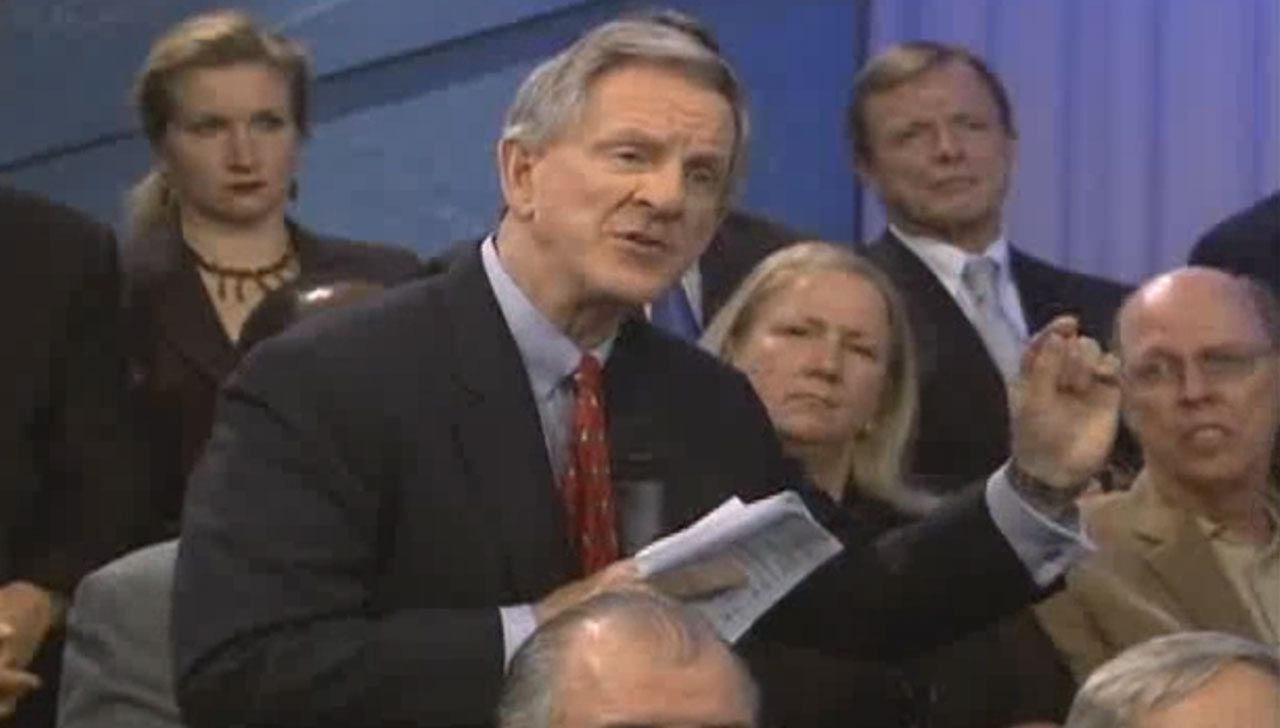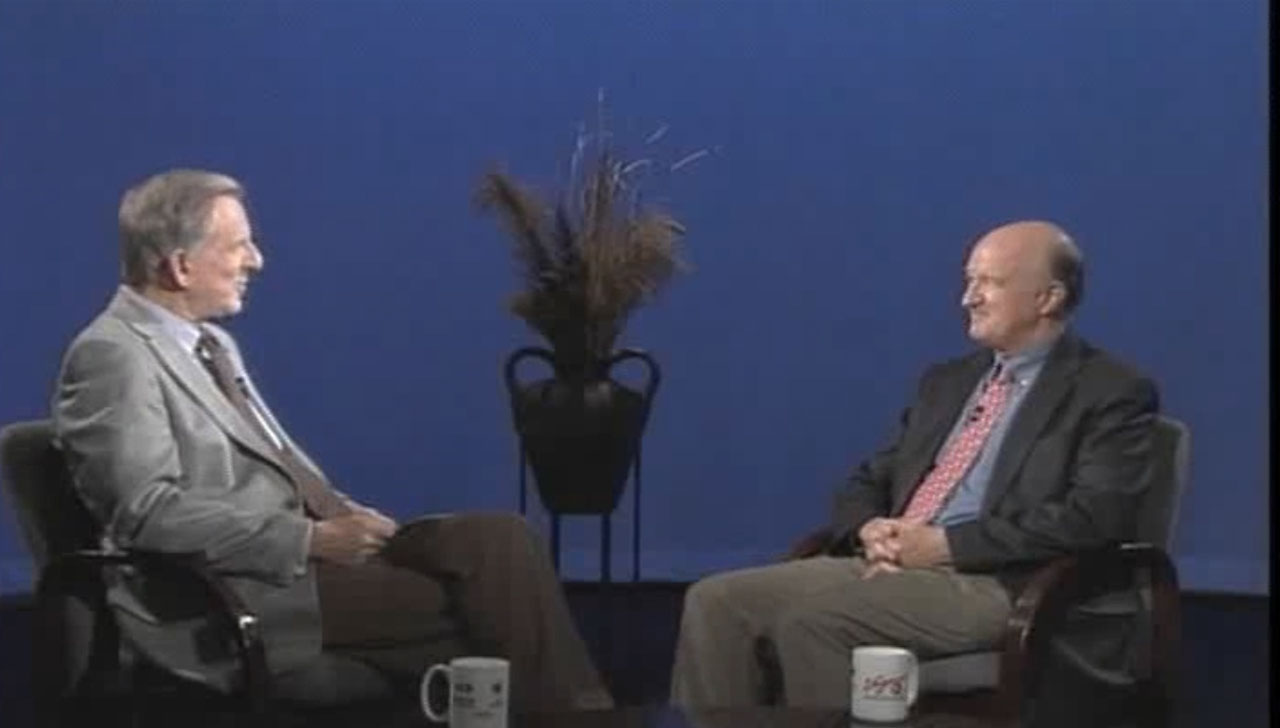
Dennis McCuistion and a panel of guests discuss alternative ways to feel better and stay healthy. McCuistion is joined by three panelists:
- Robert Carpenter – Doctor of Veterinary Medicine and President of a biotechnology company, Texas Enterosorbents, Inc
- Sheila George – Leadership Council for Nussentials, a nutraceutical company that helps people heal naturally
- Blaine S. Purcell – Medical doctor, senior physician in internal medicine at Sheppard Air Force Base in Wichita Falls, TX, Doctor of Veterinary Medicine and lawyer
Studies show that taking the right natural nutrients and supplements can increase your health, stamina, slow down aging and contribute to overall better health. In fact, some evidence points to supplements reversing the effects of some diseases. On this edition of McCuistion Television, experts discuss ways to feel better and be healthy.
Carpenter and Purcell’s backgrounds in veterinary medicine have allowed them to look at health differently than the average medical doctor, as there is more of a nutrition focus in veterinary medicine than in traditional medicine. There are natural ways to prevent disease and nutraceuticals are a big part of that. Nussentials focuses on nutraceuticals and incorporates them into their stabilized rice bran. Putting the right nutrients in the body and in the environment in which we live can help our bodies heal.
Together the panelists discuss micronutrient additions to a whole food diet and its benefits to diabetes patients and the critical nature of lifestyle changes. Ending the conversation, Carpenter touches on their clay products’ benefits to health as they are turned into pharmaceuticals.
***
1716 – 07.27.08
Podcast: Play in new window | Download
Steve Forbes joins Dennis McCuistion to discuss his support of the flat tax, issues surrounding the global economy, his views on Washington policy and his perspective on where the government should be focusing. Steve Forbes is the Editor-in-Chief for Forbes Magazine and the author of Flat Tax Revolution.
As a forerunner in the proposal of the flat tax, Forbes is adamant that the flat tax issue should be on the forefront of the Presidential agenda. He states that it not only needs reformed, but health care and social security for young Americans must also be addressed. He goes on to discuss public opinion and his belief that although the flat tax will make the most sense long term, public opinion will be something that will need to be monitored and addressed as well and his suggestions on how to do that.
It’s the complexity of the current code that creates the problem. He sited a study where one average family’s tax information was given to 45 of the best preparers in the country and they came out with 45 different results on the amount of money the family owed.
Forbes continues the discussion by candidly addressing what he would have done differently if had been elected and the different place that would have put the country. He offered suggestions and support of off-shore drilling and nuclear power plants, saying it would offer 1 million new jobs, manufacturing and construction jobs, highly skilled and highly paid jobs, thus increasing jobs, energy and national security.
He finishes off the discussion by referencing some fundamental moral problems that have left America in the spot it is in today, demographics, social security, medicare and medicaid and his suggestions as how to fix the issues.
***
09.21.08 – 1718
Podcast: Play in new window | Download
In this segment from the McCuistion Program, Charles Murray, author of The Bell Curve, Losing Ground and the recently released, Real Education, explains and expounds on four controversial truths as they relate to the educational system.
Real Education has a simple premise: the way that we are educating our children is based on educational myths and disregards four distinct truths. The lack of concern for these four truths is detrimental to the futures of our children.
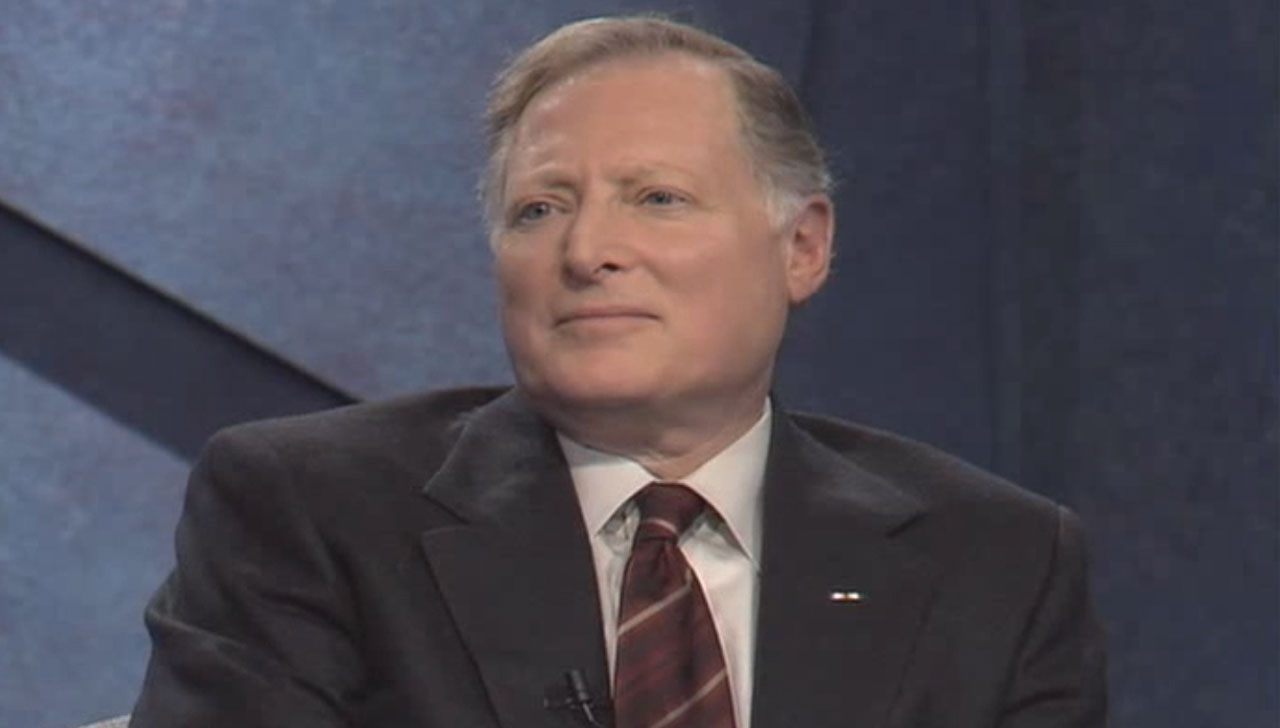
Truth #1 – Ability varies. Mr. Murray talks about the “No Child Left Behind” campaign and fallacies of thought. Schools draw on verbal, linguistic, visual, spacial and mathematical skills. However, there are many more skills that aren’t covered in school that should not be disregarded.
Truth #2 – Half of all children are below average. This statement refers to the skills that are taught and graded in school. He goes on to discuss the segregation that goes on from school to school and how that plays into this truth.
Truth #3 – Too many people are going to college. In Murray’s research he concluded that only 10-15% of kids have the ability to actually graduate from college courses, if they were in fact doing college-level work. However, 28% of Americans have bachelor degrees. He then expounds on the educationally elite and the effect that that has had on society.
Truth #4 – The future of America depends on how we educate the academically gifted.Mr. Murray believes it is our bright kids who will be leading the country, and they need to be trained better in those areas they are not currently trained in. According to Murray one of these areas is virtue. He goes on to explain the misunderstanding of true virtue among the rising generations.
He believes, “real education” is needed in order to eliminate the education myths that are being taught in our schools today.
***
10.12.08 – 1721
Podcast: Play in new window | Download
Dennis McCuistion is joined for a second time by Herb Meyer in Part Two of a two-part series on challenges facing culture in America. Meyer is the author of The War Against Progress and the former Vice Chairman of the CIA’s National Intelligence Council during the Reagan Administration. Herb Meyer discusses his suggestions for what should be done in order to save culture in America and Western civilization in general.
He begins the discussion by talking about multiculturalism and its use in education and the media. He explains how the American way has always been to integrate, which is the very thing that has made America great. On the contrary, Europeans are multiculturalists and it has not been good for their society. There needs to be an understanding among Americans, according to Meyer, that what has been done for years (immigrants becoming Americans) is the exact thing that has made us great, and we need to be very careful when we start talking about changing that.
Meyer cautions viewers and offers suggestions referencing the media and education in regards to all three of the challenges culture in America and Western civilization are facing. He continues on to offer feedback on what Americans should be focusing on in politics, education and media. He continues by explaining his views on what should be done in the Islamic world and the war. Reminding viewers of what the war is really about, he cautions the dangerous perspective we will give our children if we do not handle this correctly.
He closes the discussion talking about the education of our children regarding procreation. Having and raising children cannot be seen as an inconvenience, an expense, or harmful to the environment.
***
1709 – 02.17.08
Podcast: Play in new window | Download
On this program Stephen Moore joins Dennis McCuistion to discuss the shift from free trade to fair trade and the implications of the weak dollar. He touches on the concern over China, Japan and countries in Middle East holding portions of the American national debt. Stephen Moore is an economist and the Senior Editorial Writer for the Wall Street Journal.
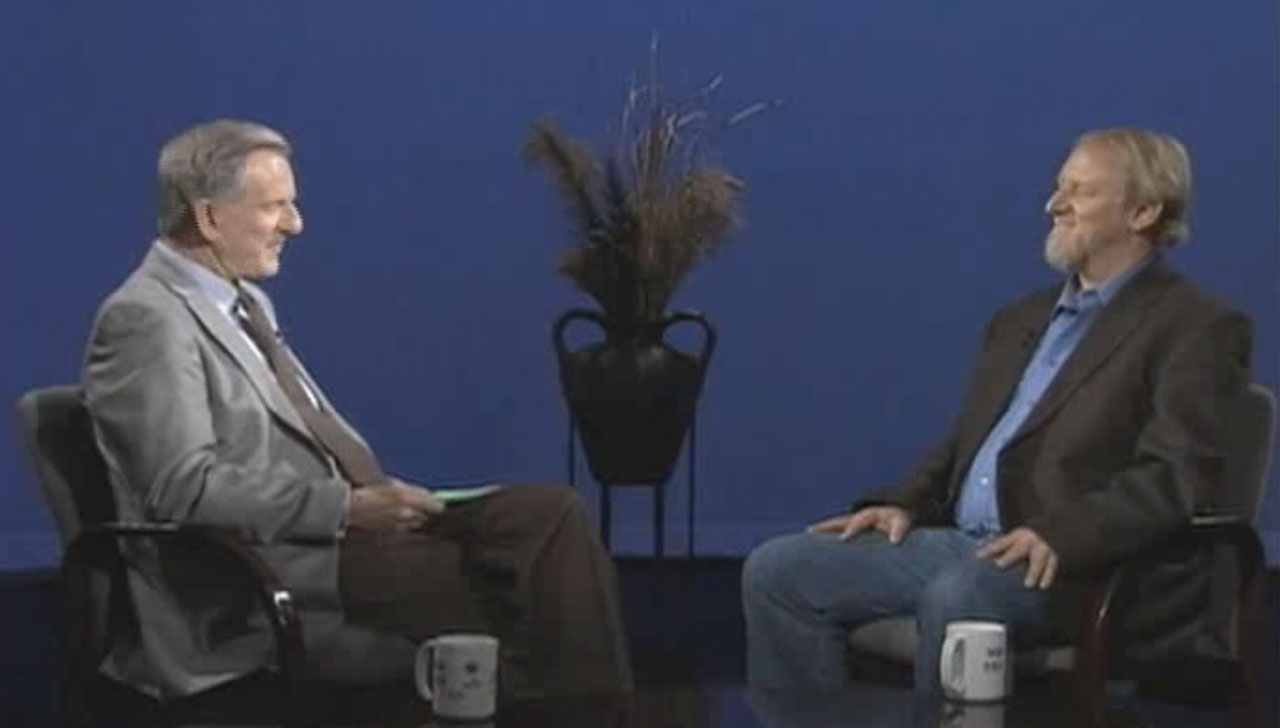
The international economy is more competitive than it has been in the last 20 years. Moore spends time discussing the importance of the tax plans in relation to the US economy and in keeping the US economy competitive with the international economy. He goes into detail mentioning corporate tax, fair tax, death tax, estate tax, income tax, state tax, etc.
In discussing fair trade versus free trade, Moore contends for free trade as it holds down prices on things that are globally traded, thus keeping the prices down.
The implications of foreign countries funding the American debt is discussed in detail. Foreigners have had confidence in the US economy for years, thus trillions of dollars in foreign investments are a part of our national debt. If foreigners were to choose to switch to another currency, we could be in a serious crisis.
Guest, David Walker, former Comptroller General of the United States, offered his viewpoint on where the nation stands economically in regards to the weak dollar. Moore follows his comments discussing the need for the U.S. to lesson off-shore oil drilling and take advantage of national resources.
They end the discussion stating that no country as ever gotten rich by devaluing their currency. Poor government policies have an affect on consumers, multi-national corporations and the world.
***
1712 – 11.23.08
Podcast: Play in new window | Download
Michael Strong, Chief Visionary Officer of Flow, joins Dennis McCuistion, host of the McCuistion Program, from Las Vegas, PBS Channel 10, during the Freedom Fest conference held there each summer. Flow is a non-profit organization started 5 years ago with John Mackey, CEO of Whole Foods. Flow focuses on liberating the entrepreneurial spirit for good and believes entrepreneurship and business can solve global problems. Mr. Strong cites companies from Whole Foods to Southwest Airlines that have a mission of doing good and tells us that there is a market driven demand for companies to incorporate social responsibility in their corporate mission.
Mr. Strong advises that non-profits be more entrepreneurial and tells us the strict charity model is now becoming more entrepreneurial in its focus as charities realize that the old way of ” begging,” is no longer a productive model for accomplishing the organization’s mission.
Adapting external social responsibility agendas seldom work. Missions that comes from within and that are congruent with the organization’s values offer more efficacy. Missions that coincide with the organization’s are naturally more effective. In addition, “do-gooder” missions often positively affect the bottom line.
Michael Strong began his entrepreneurial career as an anti-capitalist. While at the University of Chicago, he became increasingly convinced that the best way to make a positive impact in society was through business. He believes that the market can in fact create prosperity and peace.
Strong furthers the discussion on social responsibility in business by addressing the value of property rights in relation to poverty alleviation. Also included in this segment are Strong’s views on environmentalism, political allegiance, regulatory agencies and the effect of unemployment rates of young men on peace.
If you’d like to learn more of Michael Strong’s thoughts and view points regarding social responsibility in business, peace and prosperity, you can visit his blog. If you’d like to become more involved with what Flow is doing, please visit the website to learn more.
***
11.09.08 – 1720
Podcast: Play in new window | Download
Dennis McCuistion is joined by Mark Skousen, producer of Freedom Fest. Mark is an economist who takes a keen interest in economics, politics, free market issues, and others. He shares his views with no holds barred.
Freedom Fest is the world’s largest gathering of free minds. It focuses on world economics, finance, investment and debates with thought leaders. Bringing in a diverse speaker lineup from Steve Forbes to Dinesh d’Souza, the conference allows for each attendee to choose the sessions they will attend, thus creating his or her own conference.
Freedom Fest is a non-partisan, libertarian event that presents many different views in the freedom movement. During the course of the conversation, Skousen explains his motivation for creating Freedom Fest and his views on what freedom in America is today.
In addressing some issues during the last administration he explains that many citizens are toting the idea that more regulation is what is needed and is what will solve the problems America is having today. Skousen has a different view that he put to print through his pamphlet, “Persuasion vs. Force.” He asserts that the true measure of a free society is when a people can be persuaded rather than forced. He proposes that when a bill is passed, it is in fact a failure of leadership and not a success. Instead, the sign of civilized society is persuasion over force.
Discussing supply and demand he closes the interview by discussion the price of energy and inflation. He discusses the reasons for the economy today and his suggestions for moving forward from the current economic state.
***
09.28.08 – 1719
Podcast: Play in new window | Download
The present mortgage market, which includes, experts say, $100 billion dollars in subprime lending may lead to a wide disruption of financial markets, lack of liquidity, jobs and corporate profits. In this segment, the panelists discuss how this was caused and how it will affect the average person and business owner. The panelists include:
- Mike Davis, Professor of Economics and Finance, Southern Methodist University – Cox School of Business
- John Heasley, Executive Vice President, Texas Bankers Association
- Bob McTeer, Ph.D, Distinguished Fellow, National Center for Policy Analysis
- Dory Wiley, CPA, President, Commerce Street Capital
The housing market is in turmoil and the credit crunch has drastically effected the American economy and the overall feeling of personal financial stability. Explaining the reasons for the credit crunch, panelists cite housing interest rates, accessibility of mortgages and lack of equity, just to name a few. The Fed has had a role in the crisis of the day, but they contend that the Fed is not the primary player in the current credit crunch.
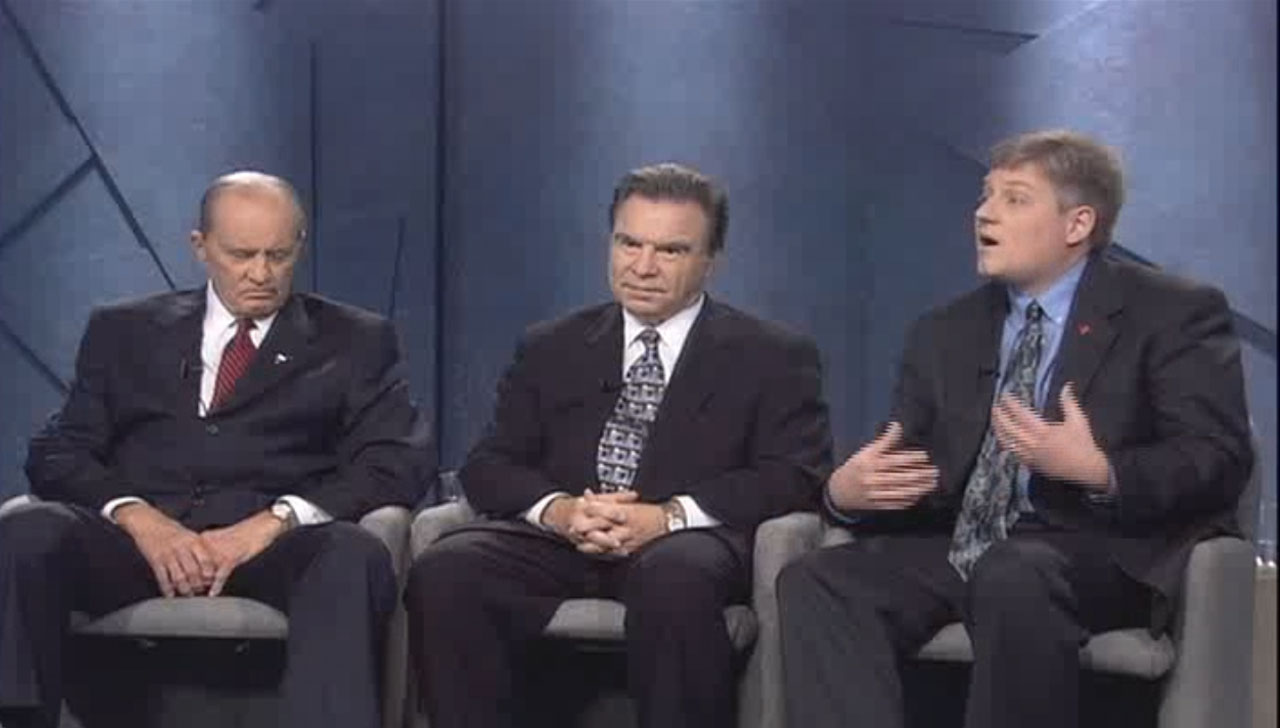
During their discussion of who is to blame for the credit crisis, they discuss subprime lending and securitization. Subprime lending and securitization are not bad in themselves, however, in excess they became very dangerous.
In a video with Fred Foldvary, Ph.D., economist from Santa Clara University, Foldvary forecasts a depression in 2008 or by end of the decade and explains his reasons why.
The discussion concludes with the panelists discussing ways to recover and safeguard for the future.
***
05.04.08 – 1703
Podcast: Play in new window | Download
Currently, there is an annual shortage of 22 million units of blood worldwide. This blood shortage is expected to increase as demand outstrips supply. In this edition of McCuistion Television, Dennis McCuistion and a panel of experts discuss the extremity of the blood shortage situation as well as innovative ways for solving the problem.
Panelists include:
- Art P. Bollon, Ph.D, Chairman and CEO, HemoBioTech, Inc.
- Lt. General B. Mittemeyer, MD, Former US Army Surgeon General and Professor of Urology, TTUH SC
- Dr. John Theus, MD, Chief Medical Officer, South Central Division, American Red Cross
With only 5-8% of the eligible 50% of the population giving blood, the blood shortage situation does not appear to be improving. This session begins with the panelists discussing issues related to blood shortages, war time differences in blood needs, and blood typing and its role and restrictions for donors and recipients.
The American Red Cross has been responsible for collecting blood for many years. Although many might assume that the biggest concern for the Red Cross is the recipients of the blood, equally important to the Red Cross is the safety of each donor. Dr. Theus goes on to explain where the Red Cross in America stands in relation to contamination rates in comparison to other countries.
Bollon and his team created a substitute for red blood cells that, while not being a substitute for whole blood, is useful in helping move blood through the body by way of the hemoglobin. They have found a way to modify the hemoglobin with a chemical to make this possible. The substitute, Hemotech, induces patients to make more red blood cells. Essentially, it helps the body correct itself. The panelists spend more time explaining this drug, how it works and what it can do for science.
***
01.27.08 – 1706
Podcast: Play in new window | Download
Is China a friend or foe? With the tremendous business opportunity in China, some say the country is a powerhouse in terms of economic development. Others say that the China threat is something we need to examine and tread lightly. Should we consider China an economic partner or a friend?
The late Larry Abraham was the Founder and Chairman of PanAmerica Capital Group, Inc. and editor of Insider Report. He joined Dennis McCuisition to discuss his somewhat controversial views of China and what some refer to as the “China threat”.
There has been no parallel throughout history for China’s economic situation. They went from almost zero economic opportunity to a powerhouse opportunity and increasing in strength. This growth directly affects the United States. Larry Abraham discusses his views on China’s military ambitions, trade surplus and the outsourcing of US jobs.
Military Ambitions – China is increasing its army. Larry Abraham explains how China’s traditional enemies play into that. Being highly exposed to China’s culture, environment and history, he explains the viewpoint that China views America with and offers his answers.
Trade Surplus – With America buying a surplus of Chinese products, it has left American trade at a deficit and China with a surplus. Dennis McCuistion and Larry Abraham discuss in detail the opposing thoughts regarding this situation and what this could mean for the future.
Exporting - McCuistion and Abraham discuss the effects of exporting American jobs overseas.
With China’s impoverished history, Larry Abraham explains the changing economic environment and its affect across the classes. He also discusses the changing environmental situation. With 70% of the water in China being contaminated, the government is making changes regarding air and water and other environmental issues.
We are seeing a new China. Larry Abraham’s perspective offers answers as to whether the China threat is something to be concerned about or not.
***
01.13.08 – 1705
Podcast: Play in new window | Download