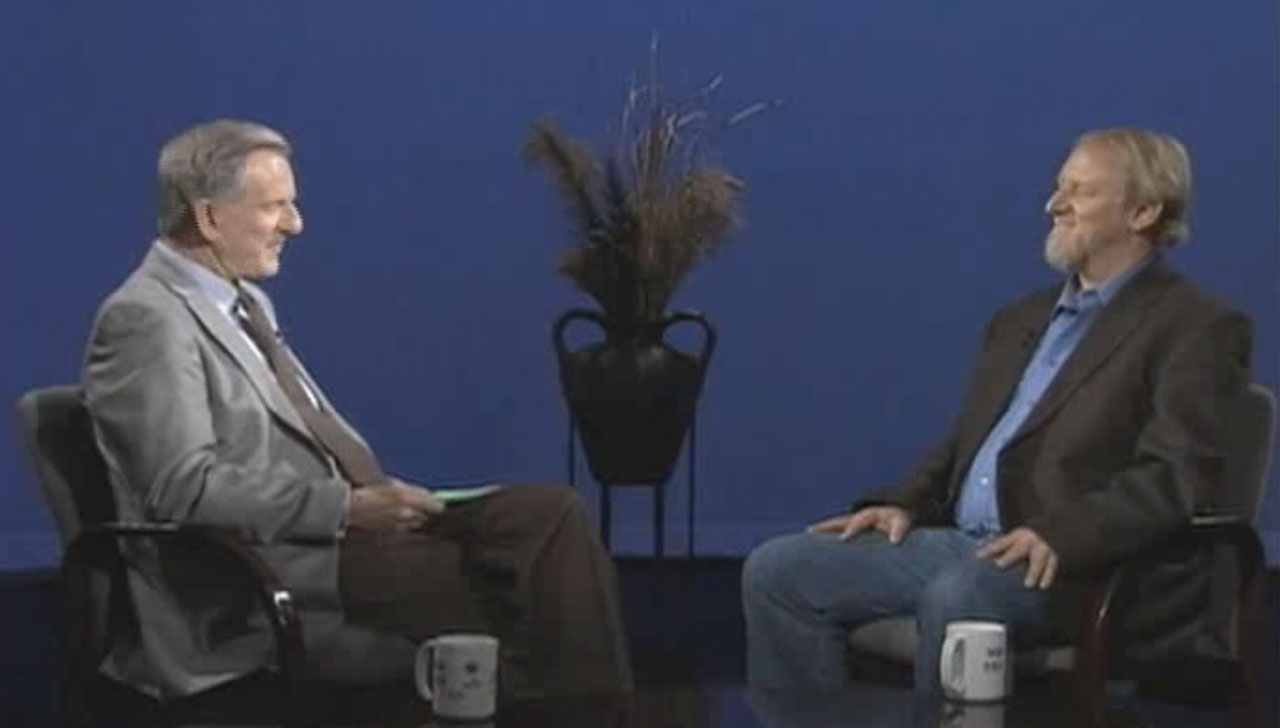
On this program Stephen Moore joins Dennis McCuistion to discuss the shift from free trade to fair trade and the implications of the weak dollar.  He touches on the concern over China, Japan and countries in Middle East holding portions of the American national debt.  Stephen Moore is an economist and the Senior Editorial Writer for the Wall Street Journal.
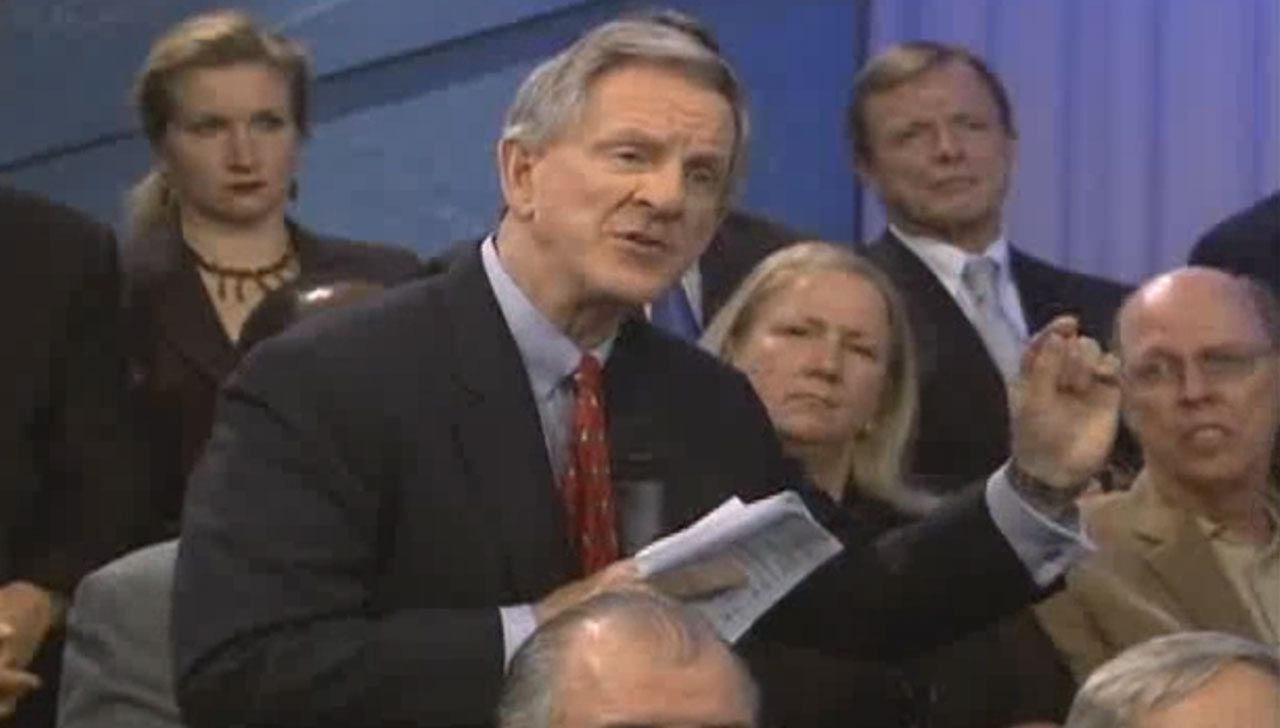
The international economy is more competitive than it has been in the last 20 years.  Moore spends time discussing the importance of the tax plans in relation to the US economy and in keeping the US economy competitive with the international economy.  He goes into detail mentioning corporate tax, fair tax, death tax, estate tax, income tax, state tax, etc.

In discussing fair trade versus free trade, Moore contends for free trade as it holds down prices on things that are globally traded, thus keeping the prices down.

The implications of foreign countries funding the American debt is discussed in detail. Foreigners have had confidence in the US economy for years, thus trillions of dollars in foreign investments are a part of our national debt. If foreigners were to choose to switch to another currency, we could be in a serious crisis.

Guest, David Walker, former Comptroller General of the United States, offered his viewpoint on where the nation stands economically in regards to the weak dollar.  Moore follows his comments discussing the need for the U.S. to lesson off-shore oil drilling and take advantage of national resources.

They end the discussion stating that no country as ever gotten rich by devaluing their currency. Poor government policies have an affect on consumers, multi-national corporations and the world.

***

1712 – 11.23.08

Michael Strong, Chief Visionary Officer of Flow, joins Dennis McCuistion, host of the McCuistion Program, from Las Vegas, PBS Channel 10, during the Freedom Fest conference held there each summer. Flow is a non-profit organization started 5 years ago with John Mackey, CEO of Whole Foods. Flow focuses on liberating the entrepreneurial spirit for good and believes entrepreneurship and business can solve global problems. Mr. Strong cites companies from Whole Foods to Southwest Airlines that have a mission of doing good and tells us that there is a market driven demand for companies to incorporate social responsibility in their corporate mission.

Mr. Strong advises that non-profits be more entrepreneurial and tells us the strict charity model is now becoming more entrepreneurial in its focus as charities realize that the  old way of ” begging,” is no longer a  productive model  for  accomplishing  the organization’s mission.

Adapting external social responsibility agendas seldom work. Missions that comes from within and that are congruent with the organization’s values offer  more efficacy.  Missions that coincide with the organization’s  are naturally  more effective. In addition, “do-gooder” missions often positively affect the bottom line.

Michael Strong began his entrepreneurial career as an anti-capitalist. While at  the University of Chicago, he became increasingly convinced that the best way to make a positive impact in society was through business. He believes  that the market can in fact  create prosperity and peace.

Strong furthers the discussion on social responsibility in business by addressing the value of property rights in relation to poverty alleviation.  Also included in this segment are Strong’s views on environmentalism, political allegiance, regulatory agencies and the effect of unemployment rates of young men on peace.

If you’d like to learn more of Michael Strong’s thoughts and view points regarding social responsibility in business, peace and prosperity, you can visit his blog. If you’d like to become more involved with what Flow is doing, please visit the website to learn more.

***

11.09.08 – 1720